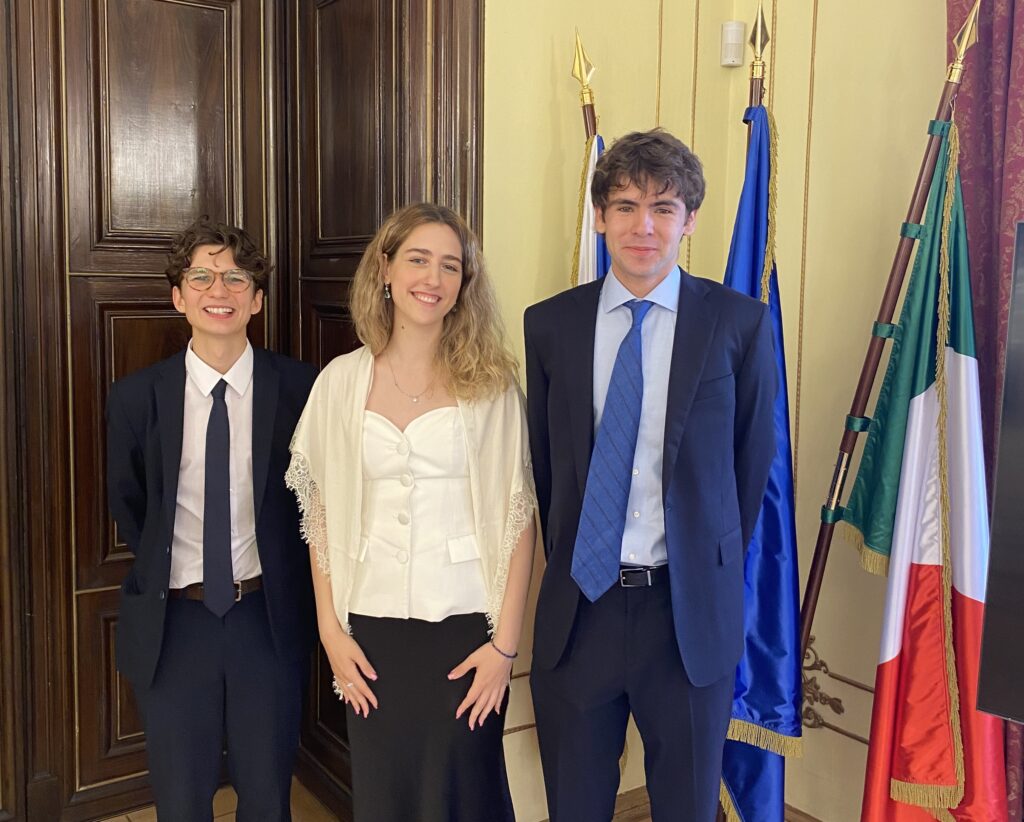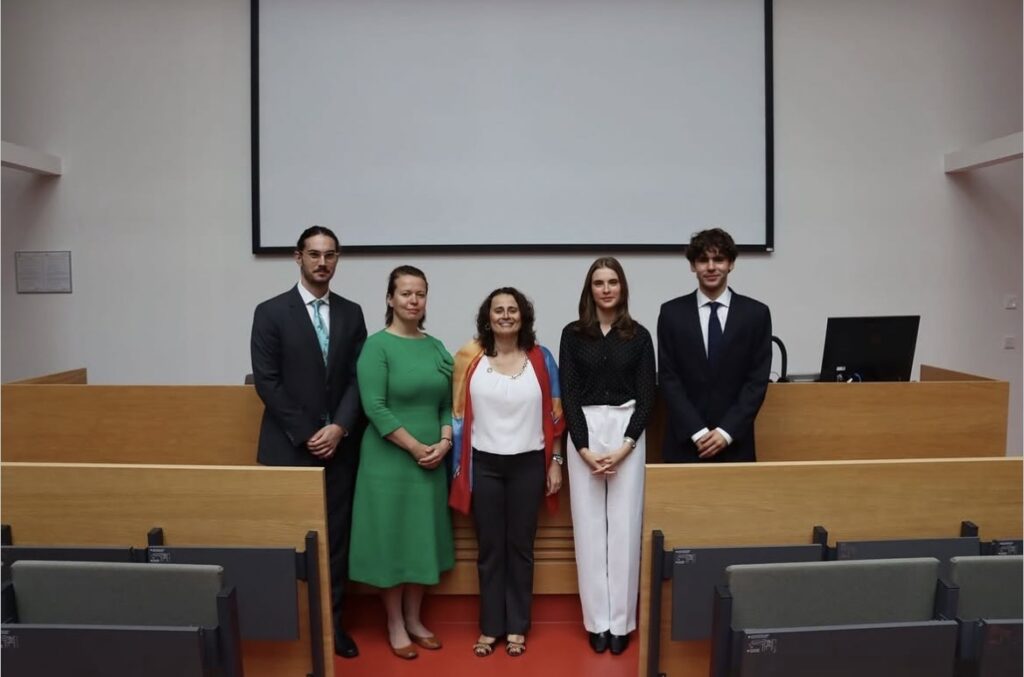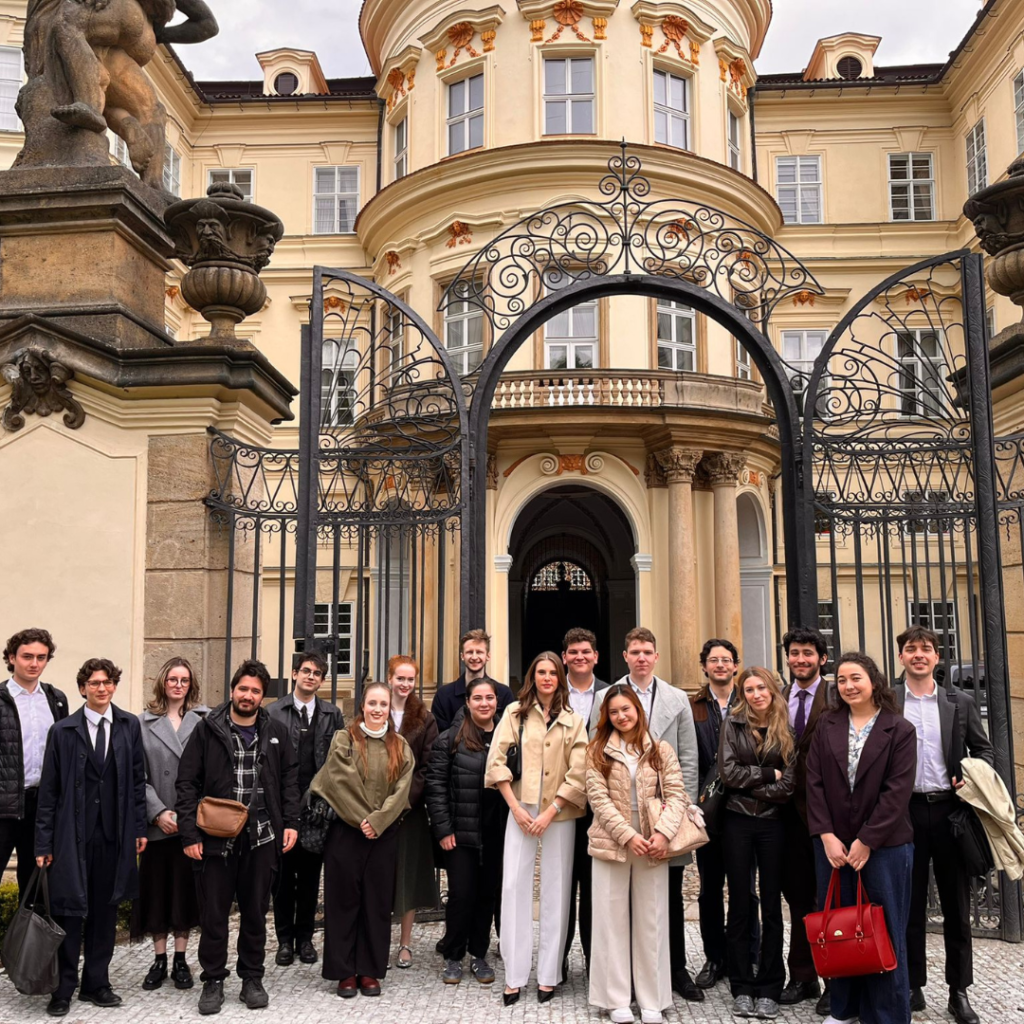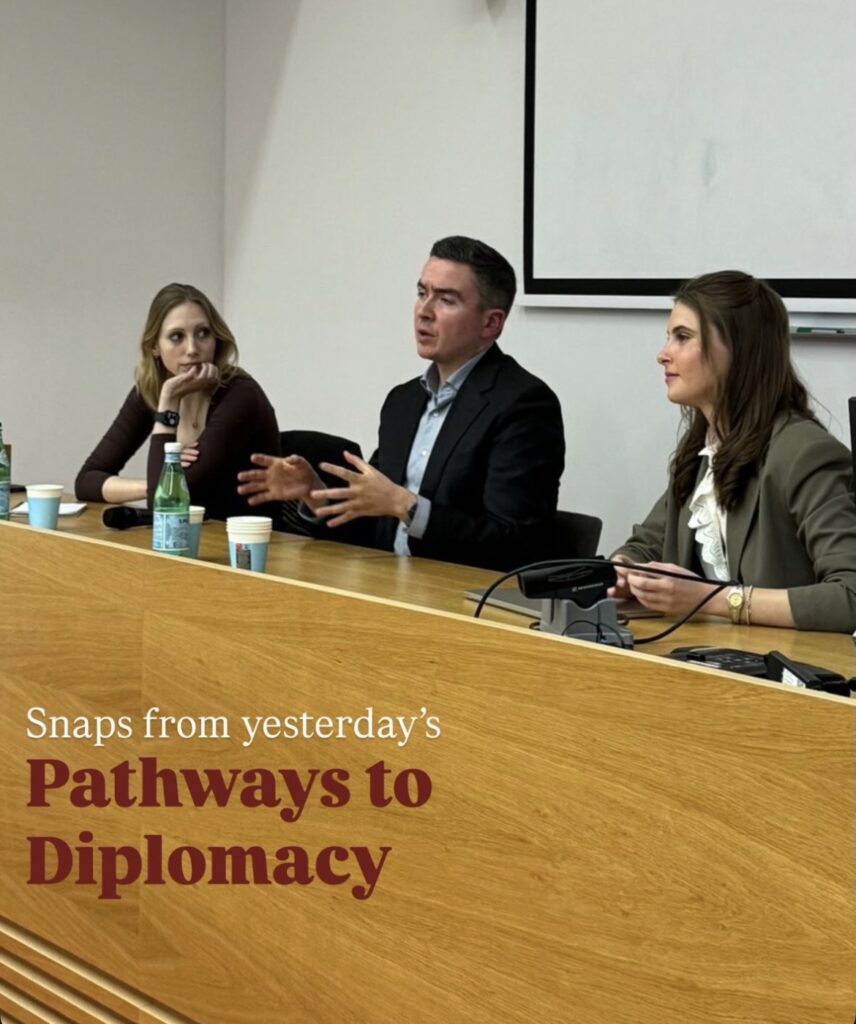

On 29 May 2026, the Charles Diplomacy Society welcomed the Ambassadors of Argentina and Chile, H.E. Claudio Javier Rozencwaig and H.E. Víctor Abujatúm Sepúlveda, for a panel discussion on South America’s evolving relationship with Europe. The event took place in the first month of the EU–Mercosur agreement’s provisional entry into force.
Both ambassadors framed their countries’ agreements with the European Union as more than commercial arrangements. Ambassador Rozencwaig argued repeatedly that the Mercosur deal is fundamentally geopolitical, a means for South America to become a reliable supplier of critical raw materials, energy, and food to a Europe seeking to reduce its dependence on authoritarian states. He dismissed European fears of an agricultural invasion with figures, noting that permitted South American beef, poultry, and sugar imports each amount to little more than one percent of annual EU consumption, and concluded that the real question is competitiveness rather than the agreement itself.
Ambassador Abujatúm traced Chile’s distinct path, a bilateral association agreement rooted in the country’s post-dictatorship reintegration into the world and built on political, cooperation, and commercial pillars. He stressed that Chile’s copper and lithium, essential to Europe’s green transition, are not leverage to be held over Europe but the basis for a long-term partnership in which value is added at home rather than exported raw to China. On environmental standards, he noted that Chile’s commitments outlast any single government, while Rozencwaig pointed out that Argentine exports already comply with the EU Deforestation Regulation.
The discussion closed on cooperation beyond trade, including artificial intelligence, security, and the unfinished political pillars of both agreements, before an audience exchange turned to the legacy of United States influence in the region and the difficult work of confronting historical memory. Reflecting on how Chile and Argentina moved from the brink of war in the late 1970s to lasting peace through diplomacy, both ambassadors offered a note of cautious optimism about what patient cooperation can achieve.
The event was held in collaboration with The Karlovian.