5 min read
March 3, 2026
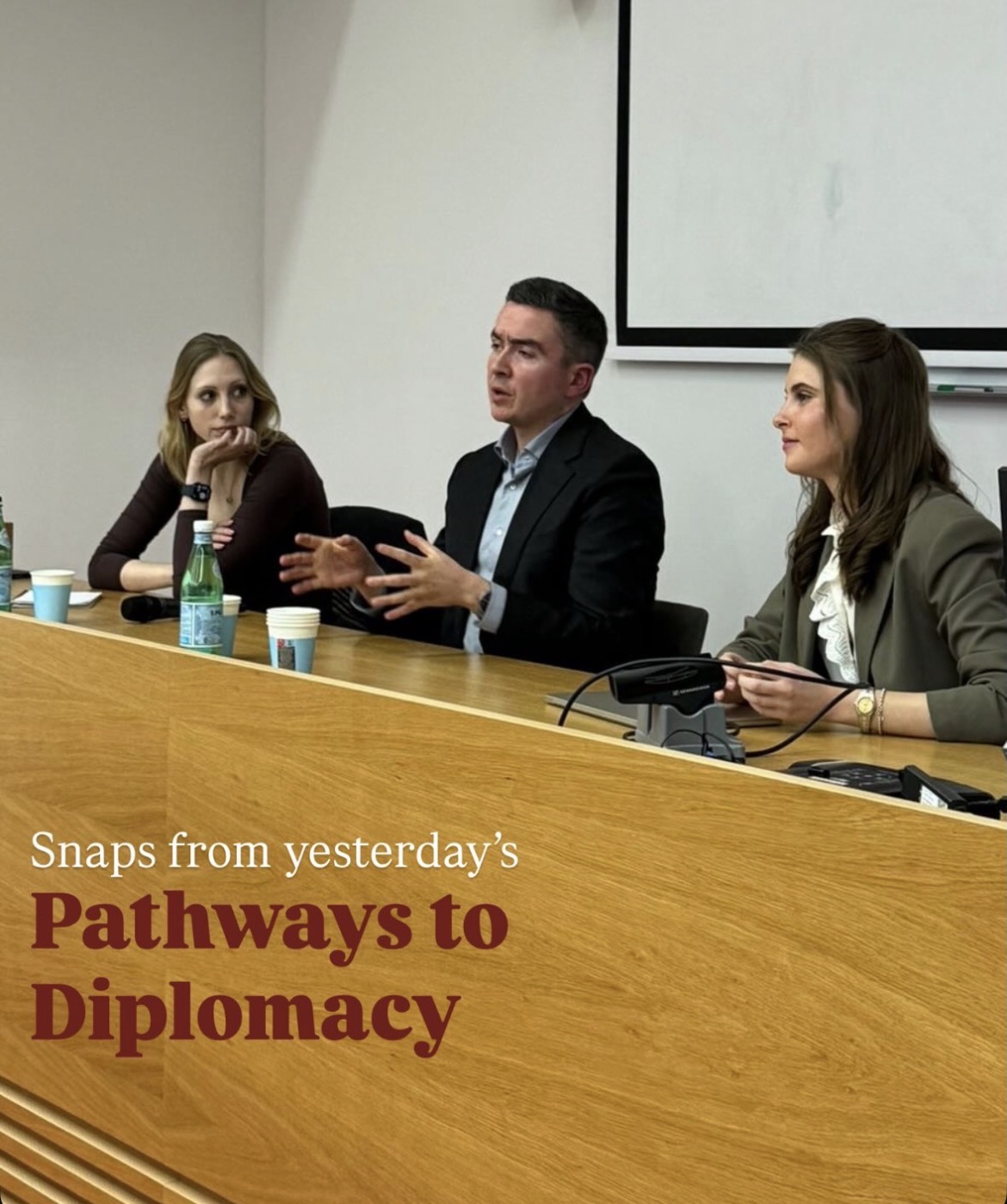
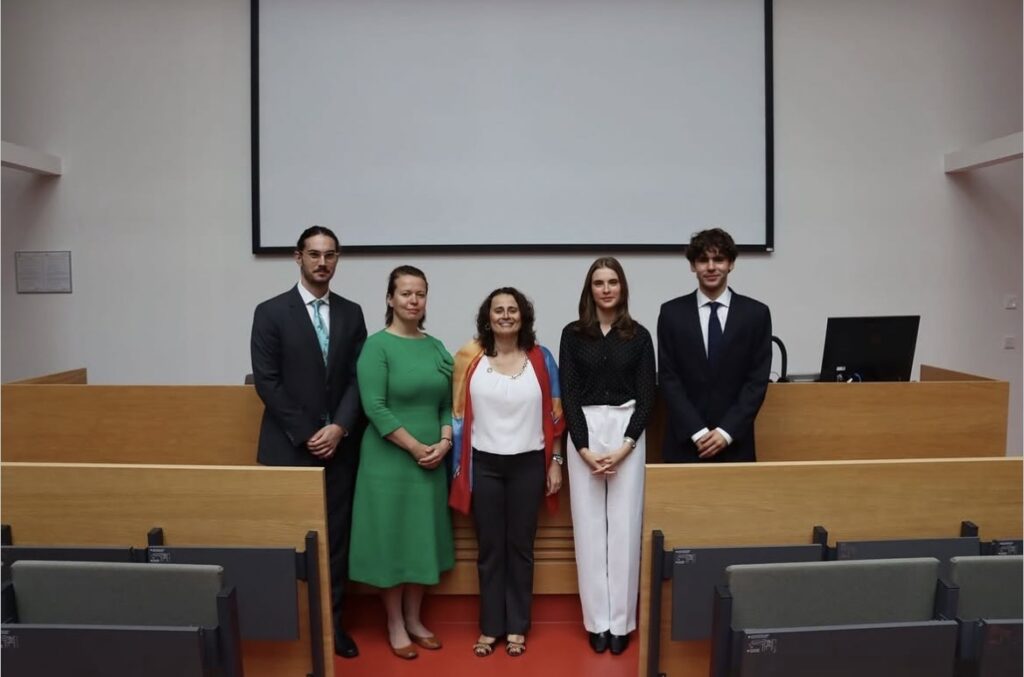
There is something quietly disarming about meeting diplomats in person. Strip away the protocol, the formal correspondence, the carefully worded communiqués, and what you find are two people who have built careers out of reading rooms, building relationships, and relocating their lives every four years to somewhere new. That was exactly the atmosphere in the room on March 3rd, when the Charles Diplomacy Society welcomed Alice and Robert, First Secretary and Second Secretary at the British Embassy in Prague, for an honest and wide-ranging conversation about what diplomatic life actually looks like from the inside.
Feelings First
The session opened on a theme that rarely features in textbooks on international relations: emotional intelligence. Alice was candid about it. Diplomacy, she said, demands a kind of interpretational awareness that goes far beyond knowing your brief. You walk into a room and you read it. You listen to what is being said and you listen, simultaneously, to what is not.
Hosting receptions and events is a central part of the job, and not merely as a ceremonial obligation. These gatherings are where relationships are seeded, where a passing conversation at a canapé table can become the foundation of a working partnership that matters months or years later. The formal negotiation table is, in many ways, downstream of all that prior relationship-building.
Robert made a point that stayed with the room: at its core, diplomacy is about relationships. The outcome of any given negotiation depends less on the position paper than on the personalities in the room, the beliefs those people carry, and the institutional roles they occupy. Knowing your counterpart as a person is not a luxury. It is the work.
When Work Comes Home
One of the more candid stretches of the evening concerned the blurring of professional and personal life. Embassy communities are small and tightly knit. Your colleagues are often your neighbours, your social circle, and your support network all at once. The boundaries that most professionals take for granted simply do not exist in the same way.
Both speakers were thoughtful about this. It is not necessarily a negative, they suggested, but it does require a certain self-awareness. Prague, they noted, is considered an enviable posting. It is stable, culturally rich, and relatively peaceful, which shapes the experience in ways that a posting elsewhere might not. The host country is not a backdrop. It is a variable that colours everything.
Four Years and Then Somewhere Else
The rhythm of diplomatic life is structured around a single number: four. Every four years or so, you pack up and move. This alone distinguishes the career from almost any other professional path, and the conversation around it was one of the evening’s most memorable exchanges.
Four years, Alice and Robert both agreed, is actually a reasonable amount of time. It is long enough to settle, to learn the city, to build genuine friendships, to feel at home. It keeps the career varied and prevents the stagnation that can set in when people stay too long in one place.
The harder truth is the one you carry with you from day one: you already know it ends. Forming deep attachments to a place or a community while holding the knowledge that you will eventually leave is a particular kind of psychological balancing act. Some people manage it with ease. Others find it genuinely difficult. Robert mentioned the importance of finding anchors outside of work, hobbies, routines, communities that travel with you in spirit even when the physical surroundings change. But he was honest that how well someone copes ultimately comes down to the individual. There is no universal strategy.
The Diplomat Stereotype
Someone in the audience asked the question that was probably on many minds: does diplomacy attract a certain type of person? The stereotype is well-worn. The extraverted, socially polished professional who glides through receptions and never puts a foot wrong.
Alice pushed back on this, gently. Modern diplomatic services are actively working to move beyond that archetype, she said, because homogeneity of personality and background is a liability, not an asset. What matters is a genuine sense of public service, a willingness to put the mission above personal comfort, and the intellectual curiosity to keep learning. Beyond that, the field has more room for different kinds of people than it once did, and the services that recognise this are, by and large, the more effective ones.
What Degree Do You Need?
The academic questions were some of the liveliest of the evening. The short answer, perhaps reassuringly, is that there is no single required degree. What tends to matter more is the level of qualification and the analytical rigour that comes with it. A background in politics, international relations, economics, or history provides useful foundations, but the door is not closed to those who arrive from elsewhere. Recruitment systems vary considerably by country, and anyone seriously considering a diplomatic career would do well to research the specific pathway in their own national context.
Artificial Intelligence and the Speed of Change
The conversation moved, almost inevitably, to artificial intelligence. The tone here was measured rather than either evangelical or alarmist. AI, used responsibly, can genuinely improve how diplomatic services operate, freeing up time for the human work that cannot be automated. The concern is not the technology itself but the pace. Governments, Alice observed, are struggling to keep up. The institutional machinery of foreign ministries was not built for the speed at which these tools are developing, and more strategic thinking about integration is urgently needed before the gap between capacity and deployment becomes a real liability.
The Deepest Lesson
The evening closed on what was, in some ways, its most pointed observation. When asked what diplomacy had taught them about human nature, both Alice and Robert converged on the same answer: always separate what people say from what they do.
Words are easy. Commitments are easy. It is the pattern of actions over time that tells you who someone actually is and what they actually want. This applies in negotiations, in international relations, in institutional politics. Robert added, to some laughter, that it applies in personal life as well.
It is the kind of wisdom that sounds simple until you try to practise it consistently. And it is, in a quiet way, a fitting summary of an evening that reminded everyone in the room why diplomacy remains one of the most demanding and most human of professions.
Charles Diplomacy Society thanks Alice and Robert for their time and candour.